Here are the Style Colors based on your personality!
Learn how your personality can influence the colors that best suit you. Discover how to use color theory and the psychology of color to create a wardrobe that reflects your unique self.
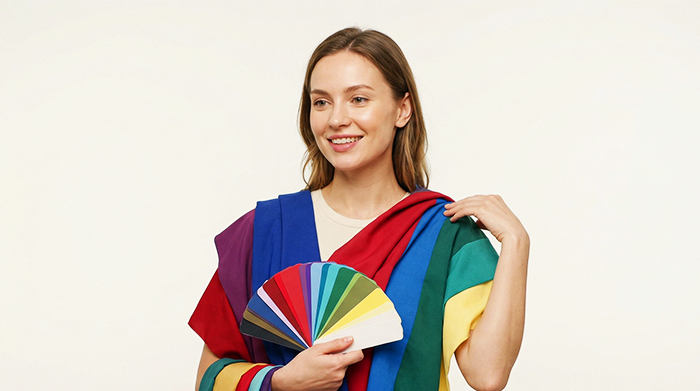
Have you ever wondered why some colors make you feel vibrant and confident, while others make you feel dull and uninspired? It's not just about fashion trends or skin tone; your personality plays a significant role in determining which colors truly resonate with you.
In this guide, we'll delve into the fascinating world of color psychology and show you how to identify the hues that perfectly complement your unique character traits.
The Science of Color Psychology: How Colors Impact Your Mood and Image
Colors have a profound effect on our emotions, behavior, and perceptions. Each hue carries a specific psychological meaning and can evoke different feelings in both ourselves and others. When we wear colors that align with our personality, we send a subtle message about who we are and what we value.
Here are some common psychological associations with different colors:
- Red: Power, energy, excitement, passion. People who are outgoing, ambitious, and confident often lean towards red.
- Blue: Calmness, trust, reliability, logic. Analytical, organized, and dependable individuals frequently prefer blue.
- Yellow: Optimism, happiness, creativity, enthusiasm. Cheerful, innovative, and creative people are often drawn to yellow.
- Green: Balance, growth, nature, harmony. Generous, compassionate, and practical individuals often find comfort in green.
- Purple: Luxury, mystery, spirituality, creativity. Imaginative, creative, and intuitive people often gravitate towards purple.
- Orange: Warmth, energy, enthusiasm, creativity. Spontaneous, adventurous, and enthusiastic individuals often love orange.
- Black: Authority, elegance, sophistication, power. Serious, focused, and powerful people often choose black.
- White: Purity, simplicity, freshness, innocence. Clean, organized, and idealistic individuals often favor white.
Identifying Your Dominant Personality Traits: The Key to Color Selection
To begin your color journey, it's essential to understand your dominant personality traits. Consider your naturally occurring tendencies in various situations. Are you more of an extrovert or an introvert? Are you highly organized or more spontaneous? Are you analytical or intuitive?
Here are some common personality frameworks that can help you understand your primary characteristics:
- The Myers-Briggs Type Indicator (MBTI): This framework categorizes people into 16 distinct personality types based on their preferences in four areas: Extraversion/Introversion, Sensing/Intuition, Thinking/Feeling, and Judging/Perceiving.
- The Enneagram: This model describes nine interconnected personality types, each with its own motivations, fears, and behaviors.
- The Big Five Personality Traits: This theory proposes five core dimensions of personality: Openness to Experience, Conscientiousness, Extraversion, Agreeableness, and Neuroticism.
Once you have a clear understanding of your dominant personality traits, you can begin to identify the colors that most likely suit you. If you want to take this a step further and discover the specific shades that match your essence, you can get my Workbook Test Color Personality, which is designed to help you find the exact color tones—out of the thousands that exist—based on your unique profile.
Using Color Theory to Create Your Perfect Wardrobe
In addition to understanding your personality, it's helpful to learn some basic color theory concepts to create a cohesive and harmonious wardrobe.
- Complementary Colors: These are colors that are opposite each other on the color wheel. Wearing complementary colors can create a dynamic and visually interesting look. Examples include red and green, blue and orange, and yellow and purple.
- Analogous Colors: These are colors that are adjacent to each other on the color wheel. Wearing analogous colors can create a harmonious and calming look. Examples include blue, blue-green, and green.
- Monochromatic Colors: This involves wearing different shades and tints of a single color. A monochromatic look can be sophisticated and elegant.
Experimenting and Finding Your Personal Style
The best way to discover the colors that truly make you shine is to experiment. Try on clothing in different shades and notice how they make you feel. Do you feel energized, calm, confident, or perhaps a bit washed out?
Pay attention to compliments you receive. Do people often comment on how great you look in a certain color? These are valuable clues that can guide your color choices.
Remember, style is a journey, not a destination. As you evolve and your personality grows, your color preferences may also change. Embrace the process and have fun discovering the hues that allow your authentic self to truly shine.